I have been looking forward to finally getting a chance to gather and analyse the data from my students to figure out the questions we were tasked in Week 1 of our RPI course.
What Kind of Reader Are We?
It has been great using and adapting the resources shared to use in my class, even the more "teacher talk" type ones like (click image below)....

I was really proud of my highly dyslexic student who came up with the pithy statement, "you learn to read so that you can read to learn." Students know that he struggles a lot with writing and reading text, but orally, he does have a way with words and they thought that was a pretty cool way to say how "reading [was] core to learning." I also like to think of the last comment made regarding what good readers do and, "[Reading] with expression," might be connected to the time we spent this term playing with words, writing and reading poetry - through listening to songs and watching poetry reading tutorials, and other oral readings online. I am also pleased to see students included the reading to "practice" skills and "to enjoy." We had been spending a fair bit of time on different skills lately and I was a bit worried they might forget the enjoyment factor.
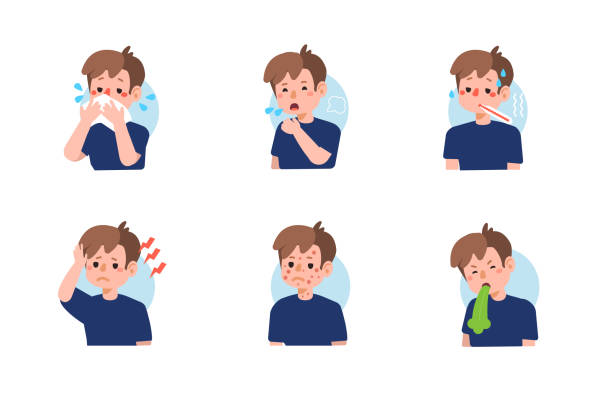
And then.... the Lurgies hit us hard staff and students! Classes decimated to less than half the size with repeated and various bugs. For 2 weeks we could not get back to regular class sizes until last week!
What did our Readers Survey say:
The following results show students' perceptions with scores of 1-2 (Very Unlike and Unlike Me) and 3-4 (Like Me and Very Like Me)


This made me wonder how much students self-reporting, and even teachers observing, underestimate how much "reading" students are engaged with. Evidence suggests reading mileage counts for a lot (with regards to skills, enjoyment and success - sorry no study to cite). I wonder if there is a way to track this in or out of classes to get more accurate data than self-reporting. Perhaps we need to redefine reading for the purposes of this data collection?
I am very interested to see what my students think of this data and more in our class discussions this week. Especially what they see as needs for our class to improve upon and how we may set goals. Watch this space. We are hoping to do this in class discussions this week. Today's lesson was a bit of a challenge - trying to model how to not only read a graph, but also create a generalization statement. Now in hindsight, I was trying to do a little too much, too fast, for year 9s. So I was not too successful today. Try again tomorrow with some adjusted planning.
Today - I tried to:
- Review slides 1-4 we discussed and started well with in week 7. (Until all the Lurgies hit.) Some who were sick then, needed the quick review.
- Introduce the Ground Rules for Talk - with the class doing a quick group chat and filling in the info for slide 3 on "Why these rules are important"
- Model reading and creating general statements about what the data shows in slide 4 - sample from our class data.
- Model with a second sample and set up for self/peer assessment tomorrow with the rest of our class data.
No comments:
Post a Comment